Showing posts with label grades 3-6. Show all posts

Friday, October 19, 2012

Fairy Tales Unit Study

Fairy Tales

We've been doing a fun lit unit on fairy tales at home.  There are so many wonderful books out there that it's hard to narrow the list, but these are the ones that we've enjoyed most recently.  Also, I've easily found printable activities online that fit this unit nicely.  It can be adapted to many grade levels without much work - and it's a great multilevel unit if you're looking for a way to simplify.

This list is for elementary grades... stay tuned for my upcoming list of teen resources.

Collections (a great jumping off point)
The Random House Book of Fairy Tales (my favorite) by Ehrlich/Goode
Classic Fairy Tales by Scott Gustafson
The Kingfisher Book of Fairy Tales by Vivian French (hard to find, but I love the illustrations)

Activities and Study Guides
Literature Pockets: Folk and Fairy Tales (K-1)
Literature Pockets: Folk and Fairy Tales (2-3)
Fables, Myths and Fairy Tales Writing Lessons by IEW
Fairy Tales Comprehension Guide by Veritas Press
Imitation in Writing - Fairy Tales by Logos Press

Websites and Printables
Cinderella Stories (K-2)
Cinderella Stories from Around the World - extensive list!
Graphic Organizers - great for comparing stories, story maps, etc.
Fairy Tale Unit Guide
K-2 fairy tale lessons and printables
Unit for grades 3-5
Scholastic site - nice background information. Click on the Teacher's Guide icon.

We're doing a 6-week unit, and studying a different story every week.  We're reading multiple versions of the same story, and doing some compare/contrast activities using the printables I linked above.  One week is all about Fractured Fairy Tales (The Stinky Cheese Man and Other Fairly Stupid Tales by Jon Scieszka is a fun collection), and one week is dedicated to reading the original story contrasted with one told from a different narrator's point of view (I highly recommend The True Story of the 3 Little Pigs, also by Scieszka).  In the final week we'll use a blank story map to plan out our own version of a standard fairy tale, and spend the week drafting and polishing our story.

Here's a list of some of my favorite picture books in this category (not linked for purchase - they are readily available at most libraries):
The Rough-Face Girl by Rafe Martin & David Shannon
The Persian Cinderella by Shirley Climo & Robert Florczak
Yeh-Shen: A Cinderella Story from China retold by Ai-Ling Louie, illustrated by Ed Young
Cinderella by Barbara McClintock
Lon Po Po: A Red-Riding Hood Story from China by Ed Young (Caldecott Medal winner)
Rapunzel by Paul O. Zelinsky (Caldecott Medal winner)
Rapunzel by Alix Berenzy
Little Red Riding Hood by Jerry Pinkney
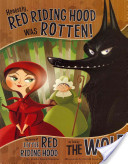
Honestly! Red Riding Hood Was Rotten!... by Trisha Speed Shaskin and Gerald Guerlais
Beauty and the Beast by Marianna Mayer and Mercer Mayer
Beauty and the Beast by Jan Brett

Series books for kids who love fairy tales:
The Sisters Grimm
Tales of the Frog Princess by E.D. Baker
Princess Academy books by Shannon Hale

Happy reading!


Sunday, March 28, 2010

Deal of the Week

Notebooking is one activity that I have loved the idea of, but we just didn't do enough.  My kids balked at a blank page set in front of them (I don't blame them!) and felt overwhelmed.  But last year I found the History Scribe website during their annual sale and it has changed the way we do history.  All of the downloadable Westvon Scribe products are 50% off this week (beginning 3/28/10).

From timeline pages, to essay questions, to maps, all the Scribe products give some structure to the notebooking experience.  The pages are not blank, they have a format - with a place for illustration, text, title, etc.  The pages have prompts to help jog the memory.  But they are not busy, with drawings all over them like some other notebooking pages out there.  Here's an example:
The History Scholar pages are a bit more complex, and will hold a lot more writing.  Each entry is also two pages long, with the second page having a timeline and an essay prompt.  The GeoScribe set contains maps of all the U.S. states and each continent, plus notebooking pages on every state and country (over 500 pages - for just $5!).  Unfortunately because of their sale, they have removed the links to sample pages for the History Scholar and GeoScribe sets for the time being, so I can't share them here.

The History Scribe Full Set, which includes the bonus History Scholar (high school level) set is on sale this week for just $8.  The price will adjust when you place it in your shopping cart.

You can also buy single sets of Scribe products (i.e. History Scribe - Ancient Egypt) and Happy Scribe copywork books at a huge discount this week from Currclick.

Happy writing!

Friday, March 12, 2010

I love a good storyteller

We love audiobooks around here.  We play them in the car, listen to them over breakfast, and everybody has them on their iPods.  I do like reading aloud to the kids, but there's only so much reading aloud one mom can do.  Audiobooks to the rescue.

Our very, very favorite lately is Jim Weiss.  We started out listening to his retelling of the Greek myths, and couldn't get enough.  He's taken us through the middle ages with Robin Hood and King Arthur and Archimedes, and now through the Renaissance with Galileo, Shakespeare, The Three Musketeers and Queen Elizabeth.  The kids can't get enough, and these are the quietest car rides we've ever had.  I can't recommend his stories enough.

If you do a classical 4-year history cycle in your homeschool, Jim Weiss also narrates the Story of the World books by Susan Wise Bauer.  The kids read the books at home, but the audio versions make for a great refresher and a chance for us to talk about the stories as a family.

Happy listening!

Sunday, January 10, 2010

Elementary Geography

Coming off the holiday break, I'm getting my plan together for our "geography club" (for lack of a better term) that meets here once a week.  It's a small group of 8-10 year olds, and we're focusing on culture with a little bit of mapping thrown in for good measure.  The plan is to hop around the world in one year.  Here are some of the resources I've found to be particularly helpful:

Scholastic Atlas of the World
This is our go-to book for basic info on every country we study.  It's very detailed and could easily be used for much older students.  We use it mostly for detailed maps and to fill out our country fact sheets that I print from Enchanted Learning.

My First Picture Atlas
It looks like this particular one may be out of print, but there are two things about it that I love, and that you could find in another similar book.  First, it's huge.  It's about 11'x14", which makes it great for group work.  The maps inside are large, bright, and cartoony, which makes it very easy to see borders, capitals, and other important landmarks.  When the kids are doing their map work, this is the one I prop up for them to use as a reference because it is so bold and easy to follow.  The National Geographic Picture World Atlas looks just as good and is available from Amazon and other retailers.  I wouldn't use either of these beginner atlases as my only map source since they are very basic, but they are a very nice addition to use along side a more detailed book.                            
                                
                                  Usborne Stories from Around the World
While the kids are working on their maps, I often read to them a traditional story from the country we are studying.  This Usborne title is a nice collection of 22 stories, each 5 to 6 pages long.  It's nicely illustrated, and the print is large, which makes it nice for read-alouds.  The text is written so that most 3rd to 5th graders could read it independently (similar to other Usborne story collections such as their Greek myths or fairy tales).

Kids Multicultural Craft Book by Roberta Gould


This book contains 35 craft projects from around the world. Each entry also contains a good amount of cultural information about the author's experiences in that country (and even includes some photographs from her travels). The craft ideas are very good, have detailed instructions and are not babyish (no paper plate masks, etc.). The only downside for our class is that a good number of them require several steps or long drying/setting times between steps, but for most families this would not be a hindrance.

Unicef's Children Just Like Me  Meet the families of about 40 children from around the world and discover what their daily lives are like!  The kids absolutely love this book, as it brings to life the similarities and differences between cultures in sweet and simple ways.

Another similar book is Children from Australia to Zimbabwe: A Photographic Journey around the World by Maya Ajmera & Anna Rhesa Versola.  This book has more information about the geography and the larger culture in each of the countries, including favorite foods, sports, past times and holidays.
My group likes to cook, so we've used two different books for our recipes.  First is Eat Your Way Around the World by Jamie Aramini.  This one includes a full meal for each country, so we usually choose one or two pieces to make (usually dessert!).  There are also great cultural references included such as how food is served and what traditional foods signify in that country.  And the recipes are delicious, which doesn't hurt.
Kids Around the World Cook! is the other one I find myself grabbing.  The recipes are simple and traditional, and the recipes are arranged not regionally but by course.  So, all the drinks are together, all the desserts are together, etc.  This makes it easy to prepare just a side dish or a beverage to sample the country's flavors without pulling out all the stops for a full meal.

Saturday, December 5, 2009

And on the subject of the National Mythology Exam


The sub-test for this year is Heracles (or Hercules).  I found this wicked cool book at the Walters Art Gallery (they had stacks of books throughout the Greek Myths exhibit that you could peruse as you enjoyed the ancient art).  Strong Stuff: Herakles and His Labors is a picture book that describes the twelve labors given to the title character as a punishment for his transgressions (killing his family).  School Library Journal says its for grades 2-4, Booklist says 4-7, and I say all of the above.  It's a great book, and will certainly appeal to the younger kids that like superheros, monsters and all things destructive.  I like it because it's a terrific explanation of the story of Hercules/Heracles/Herakles that kids will remember.  Includes a map and pronunciation guide.

Saturday, September 12, 2009

Update: The Magician's Elephant

Well, now that I have read this book, I felt I had to post again.  Amazing!!  I honestly believe that I have to call it my New Favorite Children's Book Ever.  Ever.

Click here for an excerpt. 

I picked it up the other night at work, and couldn't put it down.  Read it all through my dinner, and brought it home that night.  It's completely enrapturing.  Kate DiCamillo is a brilliant writer all around, but there's something so poetic, so lyrical about the writing in The Magician's Elephant that I just haven't seen in a long, long time.  Its simplicity and flow remind me a bit of The Little Prince (which has been translated into 180 languages, so that's saying something).  Because the book is fairly short (208 pages, but typically only 2 paragraphs per page) it would lend itself well to a Junior Great Books style of study with multiple readings.  Read once for action, read a second time for deeper meaning, character study, and critique.

The book's website is hosting a webcast with the author on October 26 (held at Sidwell Friends School in DC, but you can log in via the Web) and I have signed up to participate!

Also from the site, you can download a free Activity Kit and Discussion Guide for the book.  Enjoy!

Susan