Showing posts with label book lists. Show all posts

Friday, October 19, 2012

Fairy Tales Unit Study

Fairy Tales

We've been doing a fun lit unit on fairy tales at home.  There are so many wonderful books out there that it's hard to narrow the list, but these are the ones that we've enjoyed most recently.  Also, I've easily found printable activities online that fit this unit nicely.  It can be adapted to many grade levels without much work - and it's a great multilevel unit if you're looking for a way to simplify.

This list is for elementary grades... stay tuned for my upcoming list of teen resources.

Collections (a great jumping off point)
The Random House Book of Fairy Tales (my favorite) by Ehrlich/Goode
Classic Fairy Tales by Scott Gustafson
The Kingfisher Book of Fairy Tales by Vivian French (hard to find, but I love the illustrations)

Activities and Study Guides
Literature Pockets: Folk and Fairy Tales (K-1)
Literature Pockets: Folk and Fairy Tales (2-3)
Fables, Myths and Fairy Tales Writing Lessons by IEW
Fairy Tales Comprehension Guide by Veritas Press
Imitation in Writing - Fairy Tales by Logos Press

Websites and Printables
Cinderella Stories (K-2)
Cinderella Stories from Around the World - extensive list!
Graphic Organizers - great for comparing stories, story maps, etc.
Fairy Tale Unit Guide
K-2 fairy tale lessons and printables
Unit for grades 3-5
Scholastic site - nice background information. Click on the Teacher's Guide icon.

We're doing a 6-week unit, and studying a different story every week.  We're reading multiple versions of the same story, and doing some compare/contrast activities using the printables I linked above.  One week is all about Fractured Fairy Tales (The Stinky Cheese Man and Other Fairly Stupid Tales by Jon Scieszka is a fun collection), and one week is dedicated to reading the original story contrasted with one told from a different narrator's point of view (I highly recommend The True Story of the 3 Little Pigs, also by Scieszka).  In the final week we'll use a blank story map to plan out our own version of a standard fairy tale, and spend the week drafting and polishing our story.

Here's a list of some of my favorite picture books in this category (not linked for purchase - they are readily available at most libraries):
The Rough-Face Girl by Rafe Martin & David Shannon
The Persian Cinderella by Shirley Climo & Robert Florczak
Yeh-Shen: A Cinderella Story from China retold by Ai-Ling Louie, illustrated by Ed Young
Cinderella by Barbara McClintock
Lon Po Po: A Red-Riding Hood Story from China by Ed Young (Caldecott Medal winner)
Rapunzel by Paul O. Zelinsky (Caldecott Medal winner)
Rapunzel by Alix Berenzy
Little Red Riding Hood by Jerry Pinkney
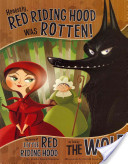
Honestly! Red Riding Hood Was Rotten!... by Trisha Speed Shaskin and Gerald Guerlais
Beauty and the Beast by Marianna Mayer and Mercer Mayer
Beauty and the Beast by Jan Brett

Series books for kids who love fairy tales:
The Sisters Grimm
Tales of the Frog Princess by E.D. Baker
Princess Academy books by Shannon Hale

Happy reading!


Wednesday, August 1, 2012

Book reviews: more on homeschooling high school

The last time I posted about homeschooling high school was a year ago - my older daughter was 13 and getting ready for 8th grade.  We were in the "exploratory phase"... trying to figure out if we could pull off high school at home.  Fast forward one year, and our high school journey is days away from officially beginning.  Not panicking.

Two books have rocked my world this spring.  First, I read, What Colleges Don't Tell You (And Other Parents Don't Want You To Know) by Elizabeth Wissner-Gross.  While the book is written for older high schoolers and their parents - those closer to the college acceptance maze - most of the advice is geared to those who got themselves in gear much earlier on.  I was so glad to be reading this book before high school even started.  Wissner-Gross's advice is amazing.  She's a professional "packager" of high school students, and shares her extensive experience with her readers.  It's practical, logical, and although lofty at times, completely do-able.  You must read this book if you are serious about getting your child into the college of their choice.


The second book, What High Schools Don't Tell You (And Other Parents Don't Want You To Know) was written in response to the first book.  The subtitle of the books is "Create a Long-Term Plan for Your 7th to 10th Grader for Getting into the Top Colleges" and, as promised, it gives the reader baby steps to follow in order to set your student up for a top-shelf admission package.  Don't be dismayed by the title; you don't have to have set your eyes on the Ivy League for this book to be meaningful.  Following the steps proposed by Wissner-Gross will make any student with good grades (not perfect - good) and decent test scores more appealing to selective schools.

While these books were not written specifically for homeschoolers (in fact, she doesn't even mention homeschooling anywhere within either book) they will be invaluable to you as a homeschooling parent.  We play the roles of teacher, coach, guidance counselor and parent (plus many others too diverse to name!) so we must be informed of the rigors of the college admission process.  It's our job.  What High Schools Don't Tell You will be $15 well spent.

Sunday, May 8, 2011

Homeschooling Through High School

Back from hiatus!

Since leaving my job at the big-box bookstore, I’ve found that I have less access to all the new releases in the book world.  But that’s okay!  I’ve decided to focus on more curriculum related materials (print, web, and other) as well as other homeschool related publications.  My hope is that you find my reviews helpful, that I might introduce you to something you hadn’t considered before, and that we both learn a little along the way. 

Homeschooling the high school years

My oldest is about to have a birthday.  13.  A teenager (teenager!).  And while we still have a year to get our acts together before officially beginning the high school years, we’re taking this next school year as our “trial run”.  So we’re buckling down, hitting the books, counting hours and calculating grades… all while it doesn’t matter.  This will allow us to get into the groove and make as many mistakes as we need to before things really count.  I’m a sucker for over-preparedness.

I’ve been checking out a lot of books lately on homeschooling through high school.  Here are my reviews of a couple of popular ones:


I loved this book.  Loved.  I wouldn’t say that it’s the most comprehensive book out there, but the areas that it does tackle are done impeccably, and leave the reader feeling confident about their ability to see their homeschooler through to graduation and beyond.  This book doesn’t try to be all things to all people; it focuses on documentation and transcript writing and does it well.  Lee Binz (the Homescholar) uses the transcripts and documents from her own children’s records as examples, as well as those of numerous other students.  It’s helpful to see exactly what a good transcript looks like, especially one that doesn’t require an umbrella school or an expensive computer program (she uses Microsoft Word for all her documents).  Her writing is engaging (lots of exclamation points, which made me laugh) and she drives her point home:  you can do this!  If you’ve made the decision to homeschool through high school, this book will give you the tools you need to document it properly.  If you’re on the fence, Setting the Records Straight may give you the confidence you need to take the leap with your student.


This is a book that came highly recommended to me from several people, so I was anxious to check it out.  It’s harder to find (not available new from Amazon or from any of the brick-and-mortar bookstores I checked) but is available at a discounted price from Christianbook.com.  I have to say that I was sorely disappointed.  Some readers may be drawn to Ms. Shelton’s conversational style (she likens her book to having coffee at her kitchen table with a friend) I found it to be unprofessional and a bit haphazard.  The book focuses more on Bible verses and finding God’s will for your student’s life than anything academic.  Again, that may be the approach that some parents wish to take when embarking on this journey, but I found the content to be lacking in terms of practical advice or direction.

I also found this book to be somewhat anti-college.  The author gave numerous reasons why students should stay away from college, then almost as an aside, presented some information that parents might need to prep their kids for college if they were positive this was the correct direction for their student.  Perhaps if you already know that your student will not attend college (or join the military, or any other path that requires specific academic requirements) this book will speak to you and encourage you on your journey.  As a parent who is unsure of their children’s paths, I would like them to be prepared for whatever direction they choose, and that means college prep courses and record keeping.


This is another book that I’ve found extremely helpful.  Dr. Byers is a college professor and homeschool parent, and writes as one experienced on both sides of the diploma.  College-Prep Homeschooling covers a wide variety of subjects, from encouraging study skills and critical thinking skills to creating schedules, syllabi and transcripts.  While the book is titled College-Prep Homeschooling, Dr. Byers makes clear that the skills covered within will benefit any high school student, regardless of their plans after graduation.  That said, if your student is college bound, this is a book you will find invaluable in terms of preparation for college level study.


Aside from the stack of books I've read about high school record keeping, I couldn't miss giving a plug to Donna Young and her amazing collection of homeschool forms.  If you haven't visited her site yet, sit yourself down with a cup o' joe and just click away.  Every year when I sit down to plan, I hit her site and download a folder full of marvelous freebies.  She has a full section on high school forms, where you'll find blank schedules, curriculum planners, grade sheets, etc.

I hope this gets you motivated!  Happy homeschooling!

Susan

Monday, January 18, 2010

And the winners are...


Newbery Medal

"When You Reach Me," written by Rebecca Stead, published by Wendy Lamb Books, an imprint of Random House Children's Books

Newbery Honor Books

"Claudette Colvin: Twice Toward Justice" written by Phillip Hoose, published by Melanie Kroupa Books/Farrar Straus Giroux, an imprint of Macmillan Children's Publishing Group
"The Evolution of Calpurnia Tate" written by Jacqueline Kelly, published by Henry Holt and Company
"Where the Mountain Meets the Moon" written by Grace Lin, published by Little Brown and Company Books for Young Readers
"The Mostly True Adventures of Homer P. Figg" written by Rodman Philbrick, published by The Blue Sky Press, an imprint of Scholastic Inc.

Caldecott Medal

"The Lion and the Mouse" illustrated and written by Jerry Pinkney, published by Little, Brown and Company Books for Young Readers

Caldecott Honor Books

"All the World" illustrated by Marla Frazee, written by Liz Garton Scanlon, published by Beach Lane Books
"Red Sings from Treetops: A Year in Colors" illustrated by Pamela Zagarenski, written by Joyce Sidman, puslished by Houghton Mifflin Harcourt

Printz Award

"Going Bovine" by Libba Bray

Printz Honor


So, I was 1 for 3.  Going Bovine came out of nowhere for me.  I read the first 2 pages and put it down... now I'm going to have to give it another shot, since I typically like Libba Bray (Great and Terrible Beauty).

Happy reading!

Sunday, January 10, 2010

Elementary Geography

Coming off the holiday break, I'm getting my plan together for our "geography club" (for lack of a better term) that meets here once a week.  It's a small group of 8-10 year olds, and we're focusing on culture with a little bit of mapping thrown in for good measure.  The plan is to hop around the world in one year.  Here are some of the resources I've found to be particularly helpful:

Scholastic Atlas of the World
This is our go-to book for basic info on every country we study.  It's very detailed and could easily be used for much older students.  We use it mostly for detailed maps and to fill out our country fact sheets that I print from Enchanted Learning.

My First Picture Atlas
It looks like this particular one may be out of print, but there are two things about it that I love, and that you could find in another similar book.  First, it's huge.  It's about 11'x14", which makes it great for group work.  The maps inside are large, bright, and cartoony, which makes it very easy to see borders, capitals, and other important landmarks.  When the kids are doing their map work, this is the one I prop up for them to use as a reference because it is so bold and easy to follow.  The National Geographic Picture World Atlas looks just as good and is available from Amazon and other retailers.  I wouldn't use either of these beginner atlases as my only map source since they are very basic, but they are a very nice addition to use along side a more detailed book.                            
                                
                                  Usborne Stories from Around the World
While the kids are working on their maps, I often read to them a traditional story from the country we are studying.  This Usborne title is a nice collection of 22 stories, each 5 to 6 pages long.  It's nicely illustrated, and the print is large, which makes it nice for read-alouds.  The text is written so that most 3rd to 5th graders could read it independently (similar to other Usborne story collections such as their Greek myths or fairy tales).

Kids Multicultural Craft Book by Roberta Gould


This book contains 35 craft projects from around the world. Each entry also contains a good amount of cultural information about the author's experiences in that country (and even includes some photographs from her travels). The craft ideas are very good, have detailed instructions and are not babyish (no paper plate masks, etc.). The only downside for our class is that a good number of them require several steps or long drying/setting times between steps, but for most families this would not be a hindrance.

Unicef's Children Just Like Me  Meet the families of about 40 children from around the world and discover what their daily lives are like!  The kids absolutely love this book, as it brings to life the similarities and differences between cultures in sweet and simple ways.

Another similar book is Children from Australia to Zimbabwe: A Photographic Journey around the World by Maya Ajmera & Anna Rhesa Versola.  This book has more information about the geography and the larger culture in each of the countries, including favorite foods, sports, past times and holidays.
My group likes to cook, so we've used two different books for our recipes.  First is Eat Your Way Around the World by Jamie Aramini.  This one includes a full meal for each country, so we usually choose one or two pieces to make (usually dessert!).  There are also great cultural references included such as how food is served and what traditional foods signify in that country.  And the recipes are delicious, which doesn't hurt.
Kids Around the World Cook! is the other one I find myself grabbing.  The recipes are simple and traditional, and the recipes are arranged not regionally but by course.  So, all the drinks are together, all the desserts are together, etc.  This makes it easy to prepare just a side dish or a beverage to sample the country's flavors without pulling out all the stops for a full meal.

Friday, December 11, 2009

Books about books

Some of my favorite books in the world are books about books.  I have stacks and stacks of them.  I love to read books, but I do admit that my secret pleasure is reading books about books.  Sometimes they're fiction (The Historian comes to mind...  and next on my list is The Book Thief) but usually not.


Nancy Pearl, librarian extraordinaire, has published a couple of books on books.  Book Lust was the first, followed by Book Crush for kids and More Book Lust.  If you ever find yourself in a reading rut, grab one of those books at your local library.  You'll have a list a mile long by the time you're half done.  Nancy makes me want to read everything.


I also picked up Honey for a Child's Heart recently.  Written from a Christian perspective, it's especially good for homeschoolers who have sensitive readers at home.  Most of the recommended books are uplifting stories and have subject matters that conservative readers will think are age-appropriate.  What I love most about the book, though, is the focus on sharing reading together as a family, and how very nourishing that is to young spirits.

But, I found a new must-have for every homeschool library (it's on my Christmas list!).  1001 Children's Books You Must Read Before You Grow Up is my new fave.  Any book that ranks Lemony Snickett right up there with A Chair for My Mother or Goodnight Moon is okay by me.


The book is organized by age group/reading level, from board books up to Young Adult.  The selections are listed chronologically, which I haven't seen before, and gives sort of an interesting perspective on the growth and evolution of children's literature.  The books are reviewed by a team, giving not just a synopsis of the book but also a brief history of it (if relevant).  It's $36.95, which is a big chunk of change for any homeschooling budget, but it's a bit less on Amazon and Borders has it on the BOGO 50% table through the holidays.  (A great gift, but at 960 pages I wouldn't recommend hanging it in your stocking.)


Happy reading!

Saturday, December 5, 2009

I'm back!

Little bit of a break... went on vacation and one thing led to another.  I haven't quit thinking of books to share, though!

My latest quest originated from my daughter.  She's 8.  After a library visit where she checked out (yet another!) Scooby Doo Mystery (blech) she laid it on the line for me.  "Mom.  I want mystery books.  But they have to have pictures.  Not picture books, chapter books.  With pictures.  Mysteries."  And so began the search for chapterbooks-withpictures-thataremysteries.  Could she stump the Homeschool Librarian?

Not a chance!  Here's what I found:


A to Z mysteries.   One book for each letter of the alphabet, plus a few bonus books.  Books in the series have 80-90 pages, with b & w illustrations on almost every page.  This gives just enough of a page break-up for young readers.  Main characters are male and female for broad appeal.

Also from this publisher is the Capital Mysteries series.  There are 11 books in the series, and each takes place in Washington, D.C.  Slightly shorter than the A to Z mysteries, at about 80 pages, Capital Mysteries have slightly fewer pictures (one illustration every 4-6 pages).  The publisher's website has activities and coloring pages that correspond to each of the mysteries for both Capital and A to Z mysteries.  Both series written by Ron Roy.


Cam Jansen Mysteries.  22 books in the series, each with about 64 pages.  Illustrations on every other page.  These books have been around for about 25 years. Written by David A. Adler.

From the author:
"The Cams are not simply chapter books with easy reading levels. Children who are just beginning to read on their own, read slowly. They read every word. But they don't think slowly. We can't ask them to speed up their reading, so to keep their attention it's necessary to keep the story moving. The Cams move quickly. Something is always happening. Characters are introduced through dialogue and plot. Scenes are set in just a few words."


Similar to Cam Jansen, Nate the Great mysteries (by Marjorie Weinman Sharmat) have been loved through generations.   Nate the Great books are an excellent introduction to chapter books.  Each is about 32 pages long, with less text per page than most of the other mystery series.  The main character will appeal to boys (although girls will enjoy them, too) and there is a spin-off series with Nate's female cousin, Olivia Sharp

22 books in the series, and 4 Olivia Sharp books.  The recent re-printing of the books contain fun activities at the end such as jokes, recipes and craft ideas that correspond with the stories.


Remember Encyclopedia Brown?  He's still around!  First published in 1963, Encyclopedia Brown mysteries have been a favorite first chapter book for families everywhere.  There are 23 books in the series (I still remember reading The Case of the Disgusting Sneakers) and each is about 100 pages long.  Pictures every 4-6 pages.  Written by Donald J. Sobol.

This series may appeal to slightly older readers who still want shorter books with some illustrations (Leroy "Encyclopedia" Brown is in 5th grade).  Publisher's age recommendation is 9-12.


Another made-over blast from the past is the series Nancy Drew Notebooks.  Shorter and simpler than the classic Nancy Drew books, these have 76-80 pages each, with a few illustrations thrown in every 6-8 pages.  Recommended age group on these is 5-8, but I think they would appeal up to age 10.

Similar in appeal is the Nancy Drew Clue Crew.  82 pages each, with illustrations on every other page.  Text is also slightly larger than the Notebooks series.  There are 27 books in the Clue Crew series and 69 books in the Notebooks series.

Sunday, September 13, 2009

A Book in Time

I stumbled upon a really helpful website this week called A Book in Time.  This site indexes TONS of books by historical period. 

If you're studying, for example, American History, you can search first by century.  Then each century is further divided into 4 to 5 subcategories.  Under each subcategory (ex: 1740-1770) is a list of book titles that fit that setting with a short description and a link to find it.  The list contains books for K-12 (I can't find a search function that limits the list by book audience) but each title is clearly denoted with suggested grade levels. 

Along with the book lists, the site also has links to craft ideas, reading logs, maps, and a host of other extras.  The only downside I can find is that most of the books are older titles.  Great books, but I'm not seeing some of my favorite books that have been published in the last few years.  Still, this site is definitely worth bookmarking and checking out before your next library visit!

Susan